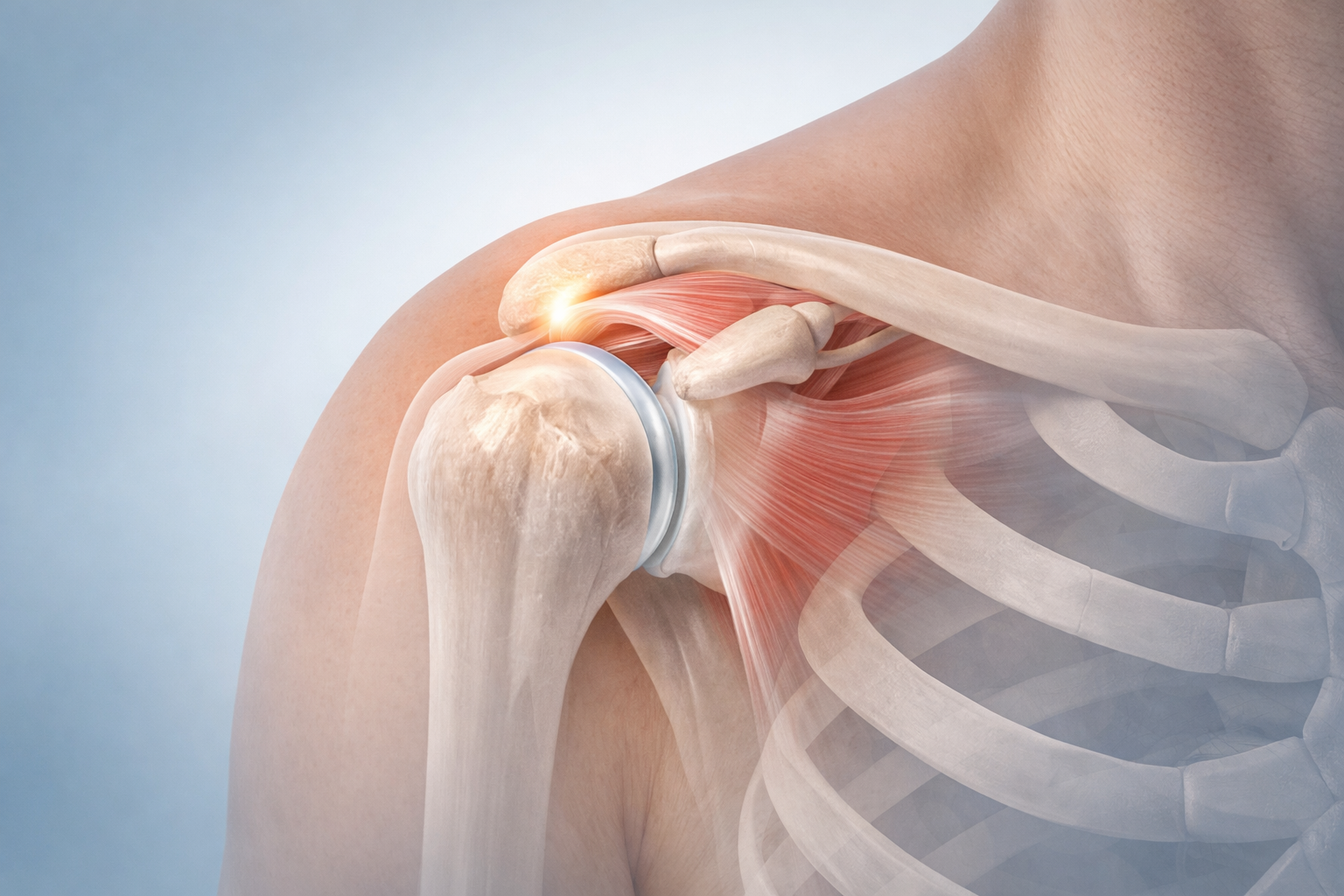
Bone Spurs in the Shoulder: When They Matter and When They Don’t
Published by Dr Oliver Khoo at Tuesday, December 23, 2025


Bone spurs in the shoulder can sound alarming when you first hear the term. Many people imagine sharp bits of bone causing constant pain or permanent damage. In reality, shoulder bone spurs are quite common, especially as we age, and they don’t always cause problems. Some people live with them for years without knowing they exist, while others experience pain, stiffness, or weakness that interferes with daily life.
Understanding when shoulder bone spurs matter—and when they don’t—can help you make informed decisions about treatment and avoid unnecessary worry or procedures.
Bone spurs, also known as osteophytes, are small bony growths that develop along the edges of bones. In the shoulder, they most commonly form around:
Bone spurs usually develop as a response to long-term stress, inflammation, or degeneration. They are often linked to ageing, arthritis, repetitive overhead activity, or previous shoulder injuries.
Importantly, bone spurs are not sharp spikes in most cases. They are typically smooth, rounded growths that only become an issue if they start to interfere with surrounding soft tissues.
The shoulder is one of the most mobile joints in the body, which also makes it vulnerable to wear and tear. Bone spurs may form when:
In many cases, bone spurs are a sign of an underlying condition, rather than the primary problem themselves.
Many shoulder bone spurs cause no symptoms at all. They are often discovered incidentally on X-rays or scans taken for another reason.
You may not need treatment if:
In these cases, bone spurs are usually considered a normal age-related finding rather than a medical issue.
Bone spurs become more significant when they begin to irritate or compress surrounding structures, such as tendons or bursae.
Common symptoms include:
Bone spurs are frequently associated with:
In these situations, the bone spur may be contributing to ongoing inflammation and pain.
For most people, non-surgical treatment is the first and most effective approach, even when bone spurs are present.
Non-surgical treatment focuses on treating the symptoms and underlying mechanics, rather than the bone spur itself. Many people experience significant improvement without ever needing surgery.
Surgery is usually considered only after conservative treatment has been tried for several months without sufficient improvement.
Surgery aims to reduce mechanical irritation, not simply remove bone spurs as a standalone solution.
While shoulder surgery can be effective, it is not without risks and should be carefully considered.
Potential risks include:
Recovery can take several months, and outcomes are often influenced by adherence to post-operative rehabilitation.
This is why surgery is generally viewed as a last resort, rather than a first-line treatment.
One of the most important things to understand is that bone spurs are often not the main cause of pain. Pain usually comes from:
Treating these factors often reduces symptoms, even if the bone spur remains.
Yes, bone spurs themselves do not usually disappear. However, they often become irrelevant once inflammation and movement issues are addressed.
They may slowly enlarge, but progression is often very gradual. Symptoms depend more on tissue irritation than spur size.
Not always. While they are common in arthritis, bone spurs can also develop from repetitive strain or long-term inflammation.
Appropriate exercise usually helps, not harms. Poorly guided or excessive loading may aggravate symptoms, which is why tailored advice is important.
Imaging can be helpful, but treatment decisions are often based more on symptoms and physical assessment than scan findings alone.
Complete rest is rarely helpful. Controlled movement and strengthening are usually key to recovery.