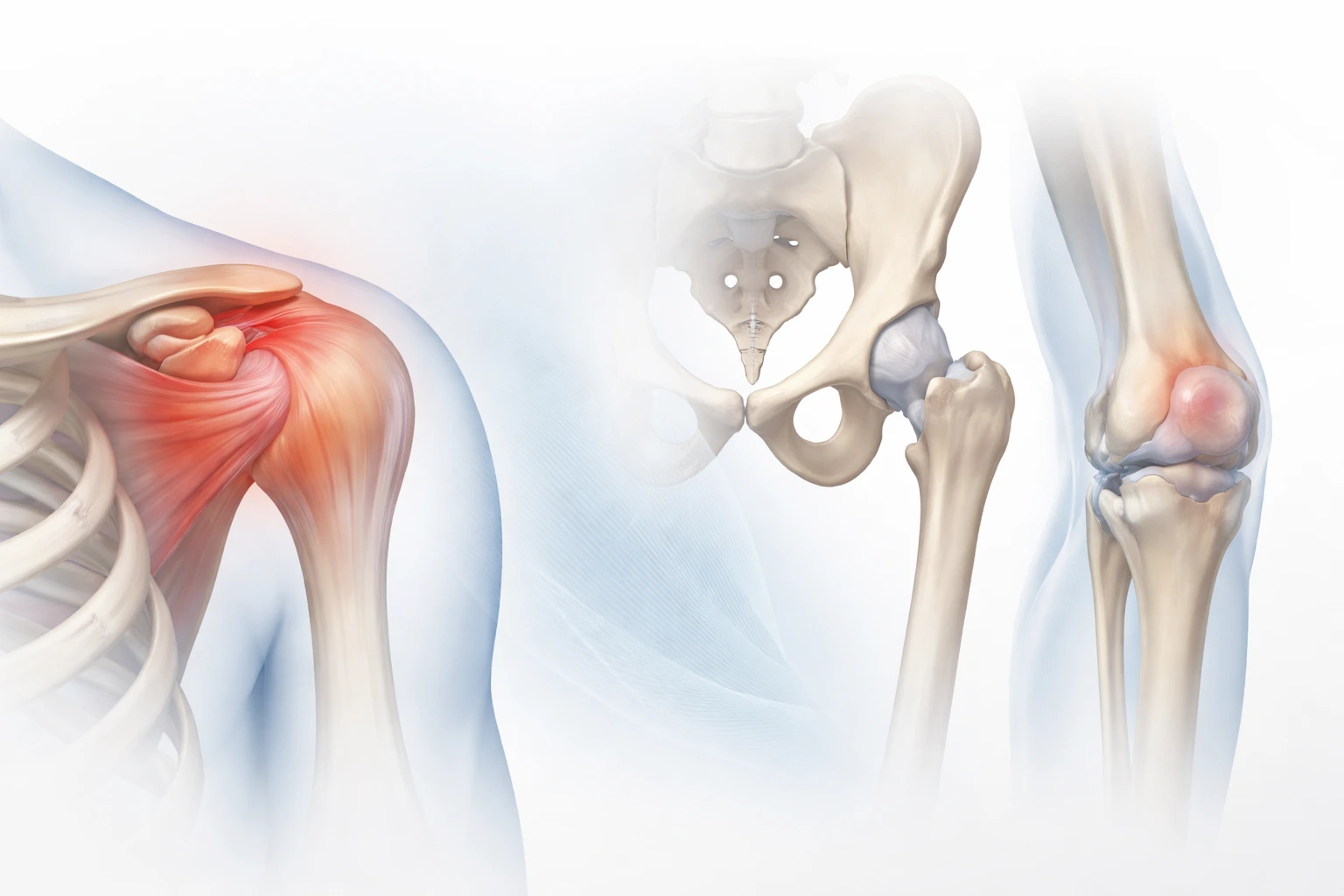
Understanding Shoulder Arthritis: Why It Differs from Hip & Knee Arthritis
Published by Dr Oliver Khoo at Sunday, April 12, 2026


Arthritis is often associated with the hips and knees, but the shoulder is also a joint that can be affected. While all forms of arthritis involve joint degeneration, shoulder arthritis behaves quite differently from hip and knee arthritis. These differences are largely due to the structure of the joint, how it functions, and the way it experiences wear over time.
Understanding these distinctions is important for recognising symptoms early and choosing the right treatment pathway.
The shoulder is one of the most mobile joints in the body. It is a ball-and-socket joint, much like the hip, but it is far less stable and relies heavily on soft tissues.
Unlike the hip and knee, which are designed to bear weight, the shoulder is designed for movement and flexibility.
Key anatomical differences:
Because of this, shoulder arthritis is often influenced not just by cartilage wear, but also by soft tissue damage.
The way joints wear down over time differs significantly between the shoulder, hip, and knee.
In short, while hip and knee arthritis are largely “wear and tear” conditions, shoulder arthritis is often a combination of degeneration and soft tissue dysfunction.
Although all arthritis types share common symptoms like pain and stiffness, shoulder arthritis presents in distinct ways.
Common symptoms of shoulder arthritis:
How it differs from hip and knee symptoms:
Diagnosing shoulder arthritis requires a more comprehensive approach compared to hips and knees.
Assessment typically includes:
In many cases, identifying whether the rotator cuff is intact is crucial, as it directly impacts treatment decisions.
Treatment for shoulder arthritis differs significantly from that of hip and knee arthritis due to the joint’s reliance on soft tissues and mobility.
For many people, initial treatment focuses on conservative approaches:
These treatments aim to restore function rather than simply reduce load, which is more common in hip and knee management.
When conservative treatments are no longer effective, surgery may be considered.
Shoulder-specific procedures include:
This differs from hip and knee replacements, which are more standardised procedures.
Key difference:
Recovery from shoulder arthritis treatment can be more complex than hip or knee recovery.
Why?
In contrast, hip and knee rehabilitation often focuses more on weight-bearing and mobility.
Managing shoulder arthritis involves a combination of medical care and lifestyle adjustments.
Helpful strategies include:
Early intervention can make a significant difference in preserving joint function and delaying the need for surgery.
Shoulder arthritis is commonly caused by cartilage wear, previous injuries, or long-term rotator cuff damage. Ageing also plays a role.
No, it is less common. Knee and hip arthritis occur more frequently due to weight-bearing stress.
Yes. Many people manage symptoms with physiotherapy, medications, and lifestyle adjustments.
It is a type of surgery used when the rotator cuff is severely damaged. It changes the mechanics of the joint to allow other muscles to compensate.
Not necessarily. The right exercises can improve mobility and reduce pain. However, improper or excessive movement may aggravate symptoms.
If you experience persistent pain, reduced movement, or difficulty with daily activities, it’s best to seek medical advice early.