What Makes a Knee ‘Fail’? Understanding Loosening, Instability & Wear
Published by Dr Oliver Khoo at Wednesday, December 17, 2025


Knee replacement surgery has transformed the lives of millions of people living with chronic knee pain. For most patients, a knee replacement provides reliable pain relief, improved mobility and long-term function. However, in a small percentage of cases, a replaced knee may begin to fail.
A “failed knee” does not necessarily mean the surgery was unsuccessful. In many cases, the implant initially performs well but later develops problems due to loosening, instability or wear. Understanding why this happens, recognising early warning signs, and knowing how revision surgery is planned can help patients seek timely care and achieve better outcomes.
This article explains what knee failure means, how it is diagnosed, and what happens next.
A knee replacement is considered to have failed when it no longer functions as intended or causes persistent symptoms that affect quality of life. This may include pain, swelling, instability, stiffness or reduced confidence when walking.
Failure can occur months or years after surgery and is usually progressive rather than sudden. Importantly, not all painful knee replacements have failed — careful assessment is required to identify the underlying cause before considering further surgery.
Loosening occurs when the bond between the implant and bone weakens. This may happen gradually due to normal wear or changes in bone quality.
Contributing factors include:
Loosening often causes deep, aching pain, particularly during weight-bearing activities such as walking or standing.
Instability occurs when the knee feels unreliable or gives way. This can result from imbalance in the surrounding ligaments or changes in joint alignment.
Instability may develop due to:
Patients often describe a sensation of buckling, shifting or lack of confidence, especially on stairs or uneven ground.
Most knee replacements include a plastic (polyethylene) insert that allows smooth movement between metal components. Over time, this surface can wear down.
Excessive wear may lead to:
Modern implants are designed to minimise wear, but activity level, alignment and time all play a role.
Infection can occur early after surgery or many years later. Even low-grade infections can cause pain and implant failure without obvious signs of redness or fever.
This is always carefully ruled out during assessment.
If you have had knee replacement surgery, seek medical review if you notice:
Early investigation can prevent further damage and simplify treatment.
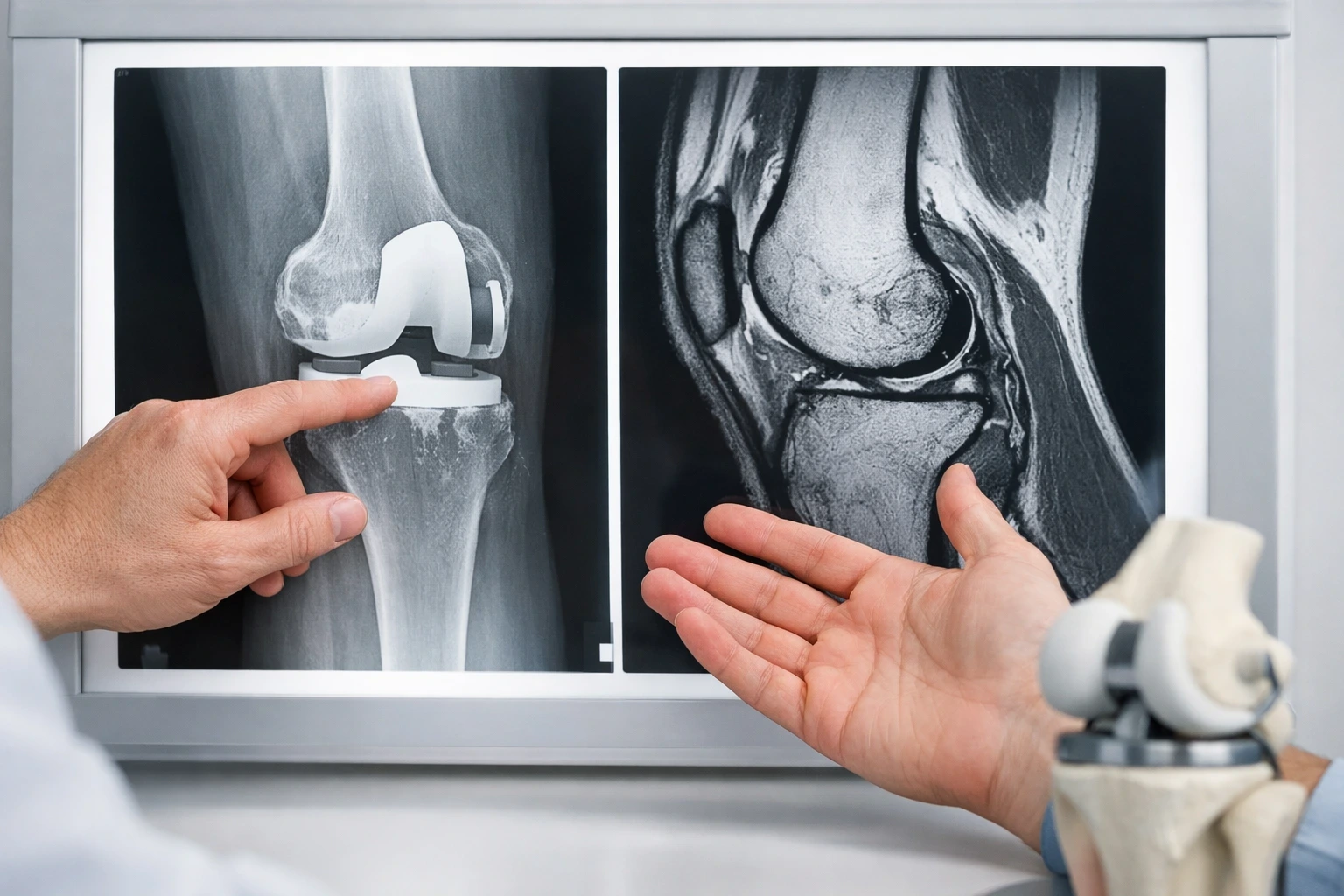
Imaging plays a crucial role in diagnosing knee replacement problems. No single test provides all the answers, so surgeons use a combination of studies.
Common imaging tools include:
These findings are always interpreted alongside symptoms and clinical examination.
Revision knee surgery is more complex than primary knee replacement and requires careful planning. The goal is to correct the underlying problem while preserving as much healthy bone and tissue as possible.
Key considerations include:
A tailored approach is essential — no two revision surgeries are the same.
While revision surgery is more demanding, outcomes can be very positive when the cause of failure is clearly identified and addressed.
Patients should understand that:
Clear communication between surgeon and patient is key to achieving the best possible result.
Most modern knee replacements last 15–20 years or longer, depending on activity level, body weight, implant type and overall health.
Occasional aches can occur, but persistent or worsening pain is not normal and should be assessed.
Non-surgical measures may help symptoms temporarily, but true loosening usually requires surgery to correct the problem.
This involves a combination of blood tests, imaging and sometimes joint aspiration to analyse fluid from the knee.
Revision surgery is more complex, but when performed by experienced surgeons, outcomes are generally very good.
Physiotherapy can help mild symptoms, but mechanical instability usually requires surgical correction.
A failing knee replacement can be distressing, especially after years of good function. The key to successful treatment lies in early recognition, accurate diagnosis and thoughtful planning.
If your knee replacement no longer feels right, seeking expert assessment sooner rather than later can make a significant difference to both surgical options and long-term outcomes.