When Hip Pain Is Coming From the Spine, Not the Joint

Summary

Hip pain is often assumed to originate from the hip joint itself, but in many cases, the true source lies in the lumbar spine. Misidentifying the cause can lead to ineffective treatment and prolonged discomfort. Understanding how to differentiate between hip and spinal causes, the role of diagnostic tests and imaging, and when to refer for specialist care is essential for accurate management and better patient outcomes.


Introduction

Hip pain is a common complaint across all age groups, from active individuals to older adults. While it’s natural to assume the hip joint is the problem, this isn’t always the case. In fact, a significant proportion of what feels like “hip pain” is actually referred pain from the lower back.

The lumbar spine and hip region are closely connected both anatomically and neurologically. Because of this overlap, symptoms can be misleading. Patients may spend months treating the wrong area, delaying recovery.

This article explores how to tell the difference, what tests and imaging can reveal, and how clinicians decide the appropriate referral pathway.


Why the Spine Can Mimic Hip Pain

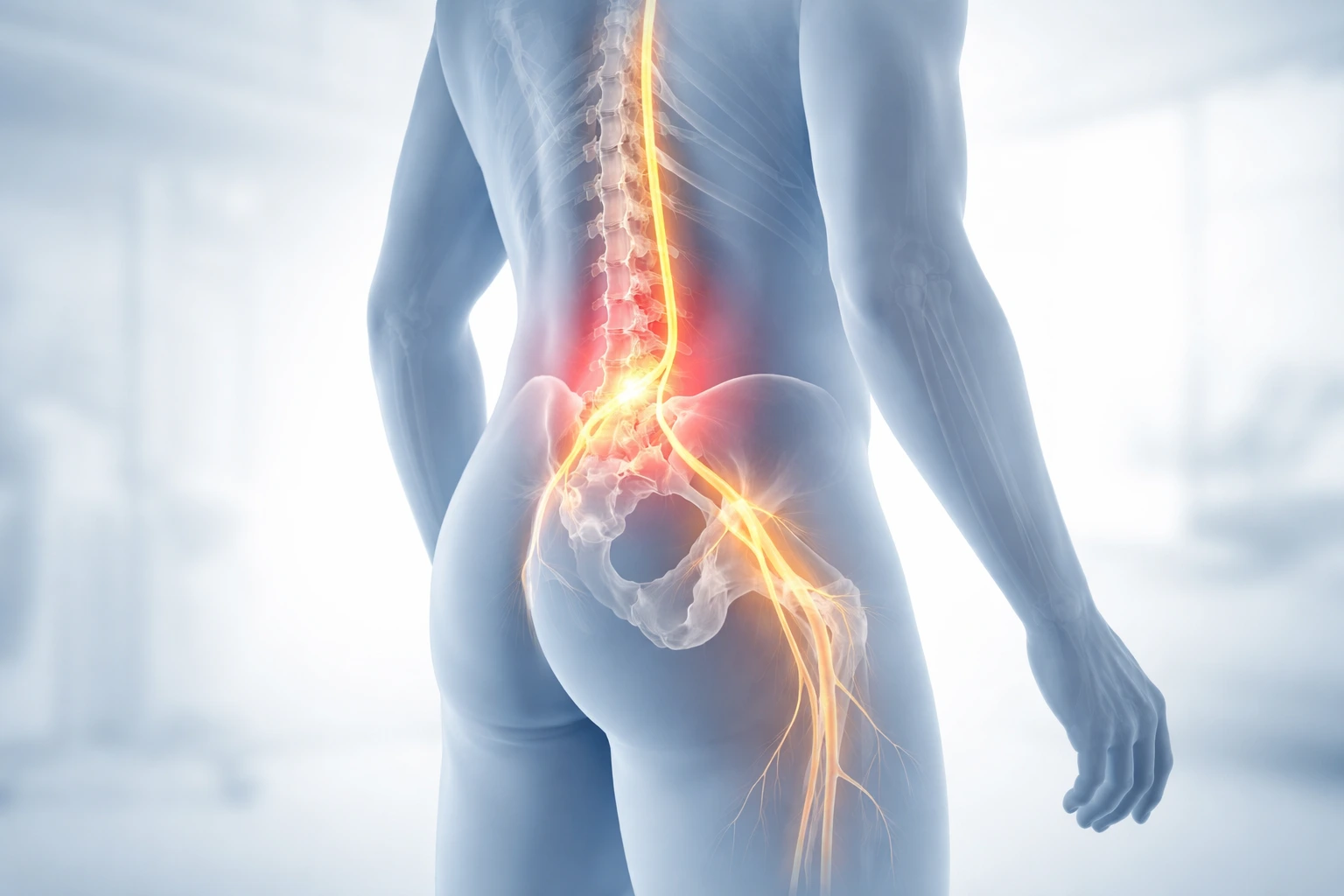
The lumbar spine houses nerves that travel down into the hips, buttocks, and legs. When these nerves are irritated or compressed—such as in conditions like disc bulges or spinal stenosis—the brain can interpret the pain as coming from the hip.

Common spinal-related causes include:

  • Lumbar disc herniation
  • Facet joint irritation
  • Spinal stenosis
  • Nerve root compression (radiculopathy)

Because nerves supply both the spine and surrounding regions, pain can radiate in patterns that closely resemble hip joint issues.


Key Differences Between Hip and Spine-Related Pain

Differentiating between these two sources is critical for effective treatment. While symptoms can overlap, there are subtle distinctions that can guide diagnosis.

Pain Location

  • Hip joint pain is often felt in the groin or front of the hip
  • Spine-related pain is more commonly felt in the buttock, lower back, or radiates down the leg

Pain Behaviour

  • Hip pain tends to worsen with weight-bearing activities like walking or standing
  • Spinal pain may worsen with prolonged sitting, bending, or certain movements of the back

Range of Motion

  • Limited hip joint mobility suggests a local joint issue
  • Normal hip movement but pain with spinal movement points to a lumbar origin

Radiating Symptoms

  • Pain, tingling, or numbness travelling down the leg is more indicative of nerve involvement from the spine

Clinical Assessment and Diagnostic Tests

A thorough clinical assessment is the cornerstone of identifying the true source of pain. Experienced practitioners rely on a combination of patient history and physical examination.

Key Assessment Approaches

  • Observation of movement patterns: Walking, sitting, and standing can reveal compensations
  • Palpation: Identifying tender structures in the hip or spine
  • Range of motion testing: Comparing hip vs spinal mobility
  • Neurological testing: Checking reflexes, strength, and sensation

Common Diagnostic Tests

  • Straight Leg Raise Test
  • Helps identify nerve irritation from the lumbar spine
  • FABER Test (Flexion, Abduction, External Rotation)
  • Assesses hip joint involvement
  • FADIR Test (Flexion, Adduction, Internal Rotation)
  • Often used to detect hip impingement
  • Lumbar Extension Test
  • Can reproduce symptoms linked to spinal structures

No single test provides all the answers, but together they build a clearer picture.


The Role of Imaging

Imaging can support a diagnosis, but it should never be the sole basis for clinical decisions. Findings must always be interpreted alongside symptoms and physical examination.

Common Imaging Options

  • X-rays
  • Useful for detecting joint degeneration, fractures, or structural abnormalities
  • MRI (Magnetic Resonance Imaging)
  • The gold standard for assessing soft tissues, including discs, nerves, and ligaments
  • CT Scans
  • Sometimes used for detailed bone imaging

Important Considerations

  • Many people have “abnormal” findings on imaging without any pain
  • Not all visible issues are clinically significant
  • Over-reliance on imaging can lead to unnecessary interventions

A skilled clinician will correlate imaging results with the patient’s presentation before making decisions.


Referral Pathways: When to Escalate Care

Understanding when to refer is just as important as making the initial diagnosis. Not all cases require specialist intervention, but some do.

When Conservative Management Is Appropriate

  • Mild to moderate pain without neurological deficits
  • Symptoms improving with physiotherapy or manual therapy
  • No red flags present

When to Refer to a Specialist

  • Persistent pain despite appropriate treatment
  • Progressive neurological symptoms (e.g. weakness, numbness)
  • Suspected serious pathology

Potential Referral Options

  • Physiotherapist with spinal expertise
  • Sports and exercise physician
  • Orthopaedic specialist (for hip-related issues)
  • Neurologist or neurosurgeon (for spinal conditions)

Early and appropriate referral can significantly improve outcomes and reduce long-term complications.


Why Accurate Diagnosis Matters

Treating hip pain as a joint issue when it’s actually coming from the spine can lead to:

  • Ineffective treatment plans
  • Prolonged discomfort
  • Increased healthcare costs
  • Frustration for both patient and practitioner

On the other hand, identifying the true source early allows for targeted treatment, faster recovery, and better overall results.


Practical Takeaways

  • Not all hip pain originates from the hip joint
  • The lumbar spine is a common source of referred pain
  • Careful clinical assessment is essential
  • Imaging should support, not dictate, diagnosis
  • Referral decisions should be timely and appropriate

FAQ Section

How can I tell if my hip pain is actually coming from my back?

If your pain radiates down your leg, worsens with sitting, or is accompanied by numbness or tingling, it may be coming from the spine rather than the hip.

Can hip and spine issues occur at the same time?

Yes, it’s quite common for patients to have both hip joint degeneration and spinal conditions simultaneously, which can complicate diagnosis.

Is imaging always necessary for hip pain?

No. Many cases can be diagnosed through clinical assessment alone. Imaging is typically used when symptoms persist or when serious conditions are suspected.

What type of practitioner should I see first?

A physiotherapist or musculoskeletal specialist is often the best starting point, as they can assess both hip and spinal contributions.

Can physiotherapy help if the pain is from the spine?

Absolutely. Physiotherapy is one of the most effective treatments for spinal-related hip pain, focusing on mobility, strength, and nerve function.

When should I be concerned about my symptoms?

Seek immediate medical attention if you experience severe weakness, loss of bladder or bowel control, or worsening neurological symptoms.


Is Surgery Really Necessary? Looking for a Second Opinion?

Depending on the severity of your condition and your lifestyle, surgery may be inevitable. But it’s your decision.
Let’s find out if it’s time or if other options are available, together.

