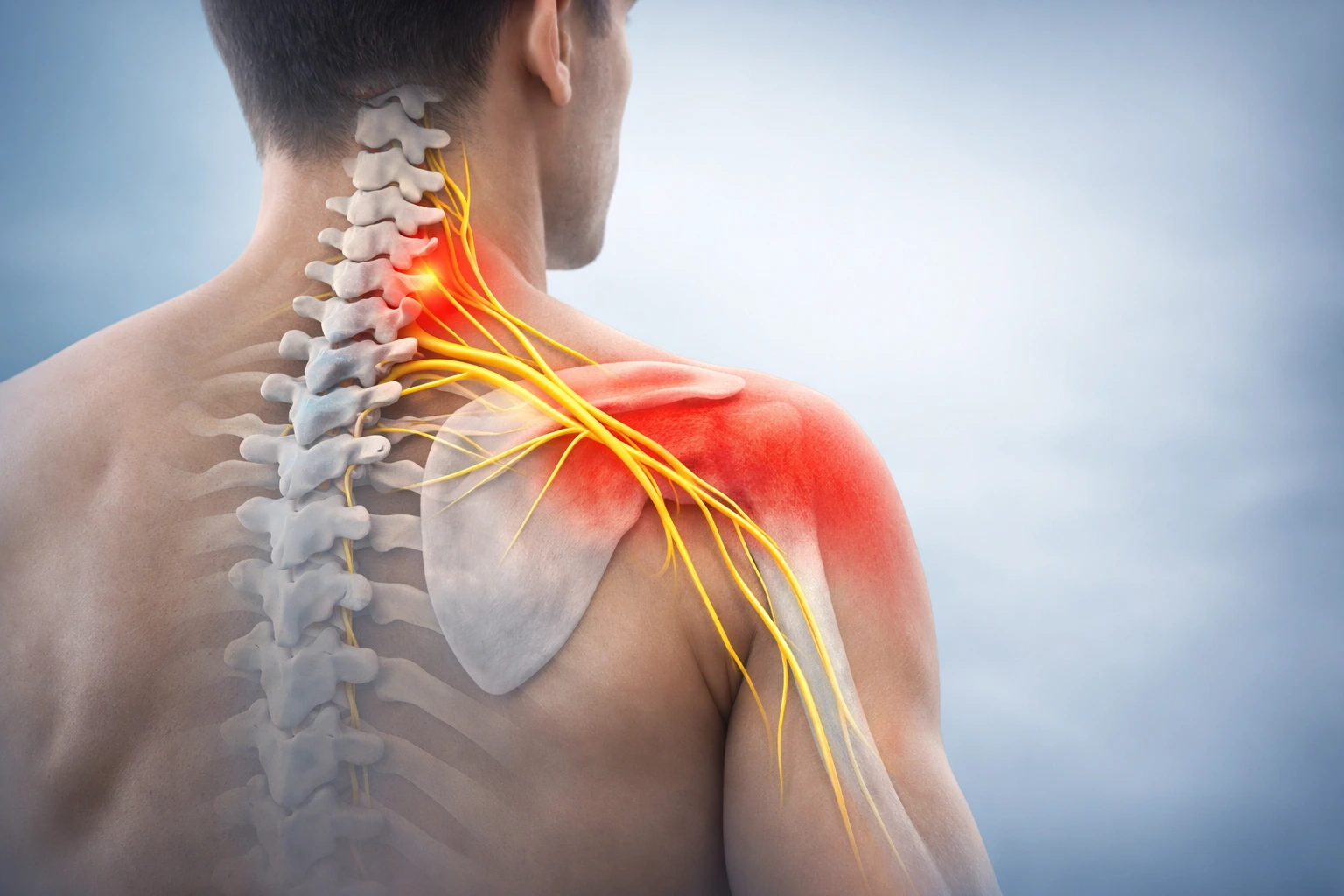
Why Shoulder Pain Often Comes From the Neck (And How to Tell the Difference)
Published by Dr Oliver Khoo at Wednesday, January 14, 2026


Shoulder pain is one of the most common musculoskeletal complaints seen in clinics across Australia. Many people assume the problem lies directly within the shoulder joint itself — a rotator cuff strain, bursitis, or wear and tear from overuse. While these issues certainly exist, a significant number of shoulder pain cases actually originate from the neck, not the shoulder.
Understanding the connection between the cervical spine (neck) and the shoulder is essential for proper diagnosis and effective treatment. When the true source of pain is missed, people can spend months treating the wrong area, often with little relief.
This article explores why shoulder pain often comes from the neck, how referred pain works, key diagnostic clues, and the importance of a thorough spine assessment.
The neck and shoulder are closely linked through shared nerves, muscles, and movement patterns. Nerves that exit the cervical spine travel through the shoulder and down the arm, supplying sensation and strength to the upper limb. When these nerves become irritated or compressed in the neck, the pain can be felt elsewhere — commonly in the shoulder.
This means the shoulder may hurt even when there is little or no damage within the shoulder joint itself.
Referred pain occurs when pain is felt in a different location from its actual source. In the case of neck-related shoulder pain, irritation in the cervical spine sends pain signals along shared nerve pathways, causing discomfort in the shoulder, upper arm, or even down to the hand.
Instead of viewing this as a table, it is more helpful to understand the patterns as a list:
These patterns explain why imaging or injections directed at the shoulder sometimes fail to resolve pain — the real issue may be higher up in the spine.
Several neck-related conditions commonly refer pain into the shoulder:
Bulging or degenerating discs can irritate nearby nerve roots. Even mild disc changes can cause significant pain without dramatic findings on scans.
Small joints in the neck (facet joints) can become stiff or inflamed due to posture, stress, or repetitive movements, referring pain into the shoulder region.
Chronic neck tension, often from desk work or device use, can overload shoulder muscles, leading to pain and restricted movement.
Conditions such as cervical radiculopathy can cause pain, weakness, or altered sensation in the shoulder and arm.
Distinguishing between neck-driven and shoulder-driven pain can be challenging, but certain clues are particularly helpful.
If turning or tilting the neck increases or relieves shoulder pain, this strongly suggests a cervical source.
Shoulder pain that appears gradually, without trauma or heavy lifting, often has a spinal component.
Pins and needles, numbness, or weakness extending into the arm or hand usually point to nerve involvement from the neck.
Pain that worsens with prolonged sitting, screen use, or sleeping positions often indicates neck dysfunction rather than isolated shoulder damage.
When scans show minimal shoulder pathology despite significant pain, the neck should be assessed carefully.
A comprehensive spine assessment is essential when shoulder pain persists or does not respond to standard treatment. Focusing only on the shoulder risks missing the primary driver of pain.
This holistic approach allows clinicians to identify whether the shoulder is the problem, the victim, or both.
When shoulder pain originates from the neck, treatments aimed solely at the shoulder — such as injections, isolated strengthening, or even surgery — may offer limited or temporary relief.
Without addressing the spinal source, symptoms often return or shift elsewhere. This is why long-term improvement typically requires:
Modern lifestyles play a significant role in neck-related shoulder pain. Long hours at desks, frequent phone use, and reduced physical variation place sustained load on the cervical spine.
Over time, this can lead to:
Addressing these factors is just as important as treating symptoms.
You should consider a neck and spine assessment if:
Early identification of neck involvement can significantly shorten recovery time.